Lesson Thirty-Three
Maintaining Your Trust Over a Lifetime
Seasons and Renewal
Creating a trust with God is a profound beginning
But that beginning is not meant to stand alone.
It is meant to unfold into~
~ a lifelong relationship
~ a family culture
~ a personal transformation path
~ and a legacy that outlives you
A trust with God is not a moment you complete.
It is a life you grow.
This lesson teaches how to keep the trust alive, rooted, and renewing through every season of your life—without fear during challenging seasons, and without gripping tightly onto good seasons in a way that turns gratitude into attachment and peace into fear.
Being able to hold all seasons lightly is one of the quiet signs of a mature trust.
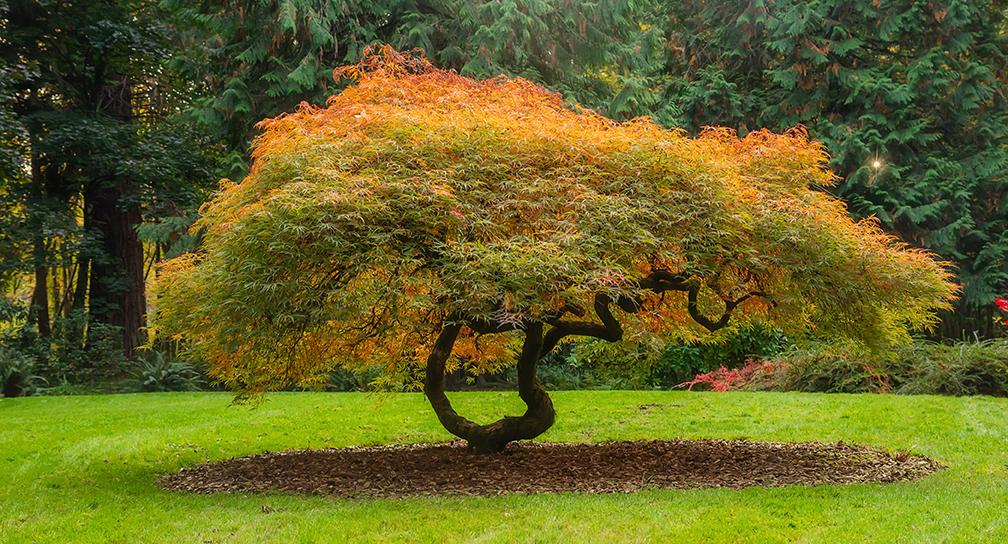
A Living Trust Is Like a Living Tree
A healthy tree does not look the same every season.
Sometimes it is full and vibrant.
Sometimes it is quiet and bare.
Sometimes it is being shaped by wind and weather.
Sometimes it is heavy with fruit.
Yet through every change, the tree remains alive.
Its strength is not in constant growth—
but in deep roots.
Your trust with God is the same.
It grows over time.
It changes shape.
It sheds what is no longer needed.
It renews what still has life.
Understanding this keeps you from fearing seasons that feel unfamiliar.
A Spiritual Trust Has Seasons, Just Like Life
Every trust relationship with God moves through natural seasons.
These seasons are not failures or setbacks.
They are signs of life.
Season of Establishment
This is when the trust is new.
Everything feels~
~ fresh
~ clear
~ hopeful
~ light
There is often enthusiasm, relief, and a sense of safety.
Like a young tree, the focus here is planting and grounding.
God establishes identity.
You learn to rest.
You begin trusting instead of striving.
This season is a gift—but it is not permanent.
Season of Deepening
As roots grow, God begins working deeper.
This season often involves~
~ healing old wounds
~ reshaping identity
~ exposing hidden fears
~ softening hardened places
Growth here is less visible, but far more important.
This is where stability forms.
Like roots expanding underground,
much of this season happens quietly.
Nothing is wrong if it feels slower.
Depth takes time.
Season of Testing
Testing is not punishment.
It is strengthening.
In this season~
~ alignment is challenged
~ old patterns are tested
~ trust is refined
~ dependence on God deepens
Storms do not uproot healthy trees—
they strengthen them.
Testing reveals what is rooted deeply enough to remain.
This season teaches resilience, discernment, and endurance.
Season of Fruitfulness
Fruitfulness follows depth and strength.
This season may include~
~ clarity
~ peace
~ opportunity
~ impact
~ wisdom
~ blessing
Fruit appears not because you forced it—
but because the roots were ready.
This is often when others benefit from your trust.
And like all seasons, fruitfulness is meant to be enjoyed in its season,
and trusted to return in new and more meaningful ways as life continues to unfold and deepen.
These Seasons Repeat
These seasons do not happen once.
They cycle throughout your life—
each time deeper, wiser, and more mature.
Knowing this~
~ prevents fear when testing comes
~ brings patience during deepening
~ allows gratitude during fruitfulness
Change does not mean loss.
It means growth.
Letting go is not losing.
It is making room.
The Three Ways Your Trust Grows Over Time
As seasons cycle, your trust matures in three dimensions.
Not all at once—
but steadily.
One~Growth in Understanding
Over time, you begin to understand God more clearly.
You grow in awareness of His~
~ character
~ voice
~ ways
~ timing
~ wisdom
~ invitations
~ patterns
This understanding brings confidence—not arrogance.
You learn how God speaks to you.
You recognize His patterns.
You trust His timing.
Like learning the rhythm of the seasons,
you stop panicking when things shift,
knowing each season brings with it its own gifts.
Two~Growth in Surrender
As trust deepens, surrender becomes easier.
You slowly release~
~ fear
~ control
~ anxiety
~ old identities
~ survival strategies
~ emotional patterns
This does not happen by force.
It happens because safety increases.
Surrender brings stability.
You are no longer easily shaken.
You no longer react as quickly.
You no longer carry what God has asked you to release.
Three~Growth in Partnership
Eventually, trust matures into partnership.
You begin acting with God, not just receiving from Him.
This shows up as~
~ clearer decisions
~ spiritual discernment
~ compassion for others
~ wisdom in relationships
~ purpose-driven choices
~ emotional maturity
This is not pressure.
It is alignment.
Like a mature tree offering shade and fruit,
your life begins nourishing others naturally.
A Quiet Reassurance
If your trust feels different than it once did,
that does not mean it is fading.
It may be maturing.
If things feel quieter,
roots may be growing.
If things feel tested,
strength may be forming.
A living trust does not remain static.
It grows—
season by season—
for a lifetime.
Renewal When Trust Feels Dry
There are seasons when trust feels quiet.
Prayer feels thin.
Clarity feels distant.
Joy feels muted.
This does not mean the trust is failing.
It means the trust is resting.
Dryness Is a Season, Not a Verdict
In nature, there are times when a tree appears still.
Leaves fall.
Sap slows.
Growth turns inward.
From the outside, it can look like nothing is happening.
But inside, essential work continues.
Roots deepen.
Energy is conserved.
Strength is preserved for what comes next.
Spiritual dryness often works the same way.
Why God Allows Dry Seasons
Dry seasons are not punishments.
They are protections.
God uses them to~
~ release dependence on feelings
~ quiet performance
~ strengthen trust beyond emotion
~ deepen roots below the surface
~ teach rest instead of striving
If growth continued nonstop, the tree would weaken.
If clarity stayed constant, trust would remain shallow.
Dryness invites dependence, not effort.
What Not to Do When Trust Feels Dry
When dryness comes, resist the urge to~
~ force feeling
~ manufacture emotion
~ panic about losing connection
~ compare your life to earlier seasons
~ assume something is wrong
Trying to “fix” dryness often delays renewal.
A tree does not fight the winter.
It rests, allowing God to prepare it for the next season of growth.
What Renewal Actually Looks Like
Renewal rarely begins with intensity.
It begins with returning.
Simple practices are enough~
~ quiet honesty with God
~ showing up without expectation
~ resting instead of striving
~ choosing presence over performance
~ staying open even when you feel empty
You do not need to feel inspired to remain connected.
Connection is not measured by sensation.
How God Renews Trust
Renewal often arrives subtly~
~ a calm you didn’t force
~ a thought that steadies you
~ a quiet reminder of safety
~ a small nudge toward rest
~ a gentle reawakening of desire
Spring does not arrive overnight.
It unfolds.
So does renewal.
A Gentle Reframe
Dry seasons are not detours.
They are part of the path.
They teach you that trust is not sustained by emotion—
but by relationship.
What feels empty now
may be making room
for deeper life than you’ve known before.
If you remain present,
life will return.
Leaves will grow again.
Fruit will come in time.
How God Prunes Without Harming
Pruning can feel unsettling.
Things you once relied on fall away.
Paths that once felt clear no longer fit.
Habits, identities, or roles lose their hold.
This does not mean God is removing life.
It means He is protecting it.
Pruning Is an Act of Care
In nature, pruning is never random.
A skilled gardener removes what drains energy,
crosses healthy growth,
or limits future fruit.
The goal is not loss.
The goal is strength.
God prunes the same way—
with precision, patience, and love.
He never cuts what sustains life.
He removes what competes with it.
What God Often Prunes
Pruning often touches things that once served you~
~ roles that no longer fit who you’re becoming
~ patterns that helped you survive but now restrict growth
~ relationships that pull you out of alignment
~ expectations placed on you by others—or yourself
~ habits that drain peace more than they nourish life
These are not bad things.
They are seasonal things.
What was necessary once
may not be necessary now.
Why Pruning Can Feel Painful
Pruning can feel painful because it loosens attachments formed around safety and familiarity.
Letting go of what feels safe can stir fear, grief, or uncertainty.
But even healthy branches need pruning.
Not because they are mistakes,
but because they no longer serve who we are becoming,
they no longer fit who we are now,
or they can not support a new season of growth.
God’s pruning is not punishment.
It is preparation for what God wants to grow.
A tree left unpruned may continue to grow—
but over time, its branches become crowded,
weakened,
and less able to produce fruit.
God prunes to make room —
so your life does not become overwhelming,
so your roots remain strong,
and so you have space to carry what is coming next.
Pruning is one of the quiet ways God says~
“I see what you are becoming, and I am making space for it.”
How to Respond During Pruning
The safest response is cooperation, not resistance.
You can respond by~
~trusting God’s timing
~releasing what feels heavy
~resisting the urge to reattach out of fear
~staying open instead of defensive
~allowing grief without clinging
You don’t need to understand everything that’s being removed.
Understanding often comes after growth resumes.
What Comes After Pruning
After pruning, growth returns—
but differently.
Healthier.
Stronger.
More focused.
Energy flows where it matters most.
Fruit develops with less strain.
What remains is better supported
because it is no longer competing for life.
Staying Rooted When Life Changes
God does not prune to diminish you.
He prunes to free you.
Nothing essential is ever removed.
Only what limits life is.
If you feel something falling away,
you are not losing ground.
You are being prepared
for what can grow next.
Life does not remain still.
Circumstances shift.
Relationships change.
Roles evolve.
Health, location, finances, and seasons move.
Staying rooted does not mean preventing change.
It means remaining anchored while change happens.
Roots Are Not Visible — But They Are Essential
A tree’s stability is not determined by its branches,
but by what lies beneath the surface.
Roots do not stop storms.
They allow the tree to remain standing through them.
In the same way, your trust with God is not proven
by how calm life stays—
but by how deeply you remain connected when it doesn’t.
What It Means to Be Rooted
Being rooted does not mean~
~ having everything figured out
~ avoiding loss or disruption
~ staying emotionally unaffected
~ clinging to the past
Being rooted means~
~ returning to God when things shift
~ letting identity remain steady even when roles change
~ allowing grief without losing trust
~ choosing alignment instead of panic
~ remembering who holds you when ground feels unstable
Roots hold not because the soil is calm,
but because they are deep.
When Change Threatens Stability
Change often challenges trust by triggering fear~
~ fear of loss
~ fear of uncertainty
~ fear of starting over
~ fear of letting go
These fears do not mean trust is weak.
They mean trust is being tested for depth.
Shallow roots panic at movement.
Deep roots absorb it.
Practices That Keep You Rooted
When life begins to move beneath your feet,
return to simple grounding~
~ quiet presence with God
~ honest acknowledgment of fear
~ releasing control again and again
~ remembering past faithfulness
~ choosing peace over urgency
~ resting when the future feels unclear
You do not need new strategies.
You need reconnection.
Roots Grow Strongest During Change
It may not feel like growth is happening
when life is unsettled.
But change often forces roots deeper.
What once felt sufficient
no longer is—
and deeper trust forms.
This is not regression.
It is strengthening.
When life changes,
do not search for stability in circumstances.
Return to what does not move.
Remain connected.
Remain honest.
Remain present.
A Long View
Trees that last decades or centuries
do not avoid storms.
They endure them.
Their strength comes not from resisting change,
but from remaining connected to the source of life
through every season.
Your trust can do the same.
Building a Family Culture of Trust
A trust with God is never meant to remain a private idea.
When it is lived consistently,
it naturally becomes the spiritual culture of a family.
Not through rules.
Not through pressure.
But through daily life.
What a Family Culture of Trust Looks Like
A family shaped by trust begins to do simple things naturally~
~ speaking openly about God’s guidance
~ praying together without formality
~ recognizing God’s fingerprints in daily life
~ teaching children to bring their feelings to Him
~ modeling peace during stress
~ discussing decisions with God involved
~ expressing gratitude regularly
~ blessing one another
~ maintaining spiritual order in the home
These practices are not rituals to perform.
They are expressions of shared orientation.
God is included—not as an authority figure looming over the home,
but as a trusted presence within it.
Children Learn Trust by Watching
Children learn far more from what they observe
than from what they are told.
They notice~
~ how fear is handled
~ how conflict is resolved
~ how decisions are made
~ how mistakes are owned
~ how peace is protected
When they see trust lived,
they absorb it as normal.
This becomes their internal reference point for life.
The Most Valuable Inheritance
A family culture of trust becomes an inheritance
more valuable than land, titles, or wealth.
It gives children~
~ emotional safety
~ spiritual confidence
~ a place to return when life is hard
~ a relationship with God that feels accessible
~ an internal compass that lasts
Money can be lost.
Property can change hands.
But trust, once rooted,
travels with them wherever they go.
The Trust Matures Into Legacy
Over time, trust grows beyond a single life.
It becomes legacy.
Not legacy as reputation—
but legacy as continuity of life.
The Layers of Spiritual Legacy~
A mature trust leaves behind several kinds of inheritance~
🌿A spiritual inheritance
Children learn how to trust God themselves,
not just believe in Him.
🌿A relational inheritance
They carry emotional stability, discernment, and wisdom
into their own relationships and families.
🌿A purpose inheritance
They understand identity and calling
without needing to prove themselves.
🌿A protection inheritance
They walk under God’s covering from childhood onward,
knowing where to return when life shakes them.
🌿A generational inheritance
The trust continues through your line
long after your life has ended.
This is how God builds families
that remain rooted across generations.
Legacy Is Built Quietly
Legacy is not built through dramatic moments.
It is built through consistency.
Through thousands of small choices
to trust God instead of fear,
peace instead of control,
presence instead of pressure.
What feels ordinary now
becomes extraordinary over time.
Guarding the Trust From Erosion
Even a mature trust needs care.
Like any living relationship,
it can weaken if neglected or slowly eroded.
There are four primary forces that erode trust over time.
1~Self-Reliance
“I can handle this myself.”
Self-reliance slowly disconnects you from God’s guidance
not through rebellion,
but through independence.
Trust fades when God is no longer consulted.
2~Emotional Overwhelm
Fear and anxiety cloud discernment.
When emotions dominate without processing,
clarity is drowned out.
This is not failure—
it is overload.
3~Neglect
Trust fades when it is ignored.
Not because God withdraws—
but because relationship requires attention.
Silence over long periods weakens awareness.
4~Toxic Influences
Certain people, environments, or patterns
pull the heart away from alignment.
Not all influences are neutral.
Some quietly erode peace.
How to Guard the Trust
Guarding trust does not require vigilance or fear.
It requires returning.
~ returning to peace quickly
~ staying in conversation with God
~ feeding your spirit regularly
~ removing unhealthy influences
~ staying aligned even when busy
These habits keep trust alive, responsive, and resilient.
What Mature Trust Looks Like
A person who has maintained their trust over years
begins to embody something unmistakable.
Not perfection—
but rootedness.
The Fruit of Long-Term Trust
Mature trust often shows as~
~ emotional stability
~ spiritual clarity
~ wisdom
~ peace in storms
~ love in conflict
~ discernment
~ compassion
~ strong identity
~ lack of fear
~ resilience
~ joy
~ authority without arrogance
These qualities are not forced.
They are grown.
Rooted, Not Rigid
This is what it means to be spiritually rooted.
Not untouched by life—
but sustained through it.
Not untouched by change—
but steady within it.
Mature trust is flexible without being fragile.
It adapts without losing center.
It listens without losing truth.
It loves without losing boundaries.
This is the fruit of long-term trust.
Conclusion — A Trust That Lives and Grows
A trust with God is not something you complete.
It is something you live.
It grows through seasons of establishment and deepening.
It is strengthened through testing.
It bears fruit in time.
It rests, renews, and grows again.
At every stage, God remains faithful.
When you understand seasons,
you stop fearing change.
When you honor renewal,
you stop striving.
When you stay rooted,
you remain steady no matter what life brings.
A mature trust is not loud or fragile.
It is quiet, resilient, and alive.
Like an old tree,
deeply rooted and well-tended,
it naturally offers shade, shelter, and nourishment
to those who come near it.
This is the fruit of a lifetime lived in trust.
A Gentle Transition Forward
Over time, something else becomes clear~
A living trust never ends with one life.
What you have cultivated does not stop with you.
It continues—through family, influence, memory, and example.
The next lesson explores how trust becomes legacy—
how it is carried forward, protected, and passed on
so that what God has grown in you
continues to give life long after your season changes.
Not as an obligation.
Not as a system.
But as continuity.
Let’s continue into Legacy and Continuity.
If you wish to print this lesson for personal reflection, you may do so.
When you’re ready to continue: → Lesson Thirty Four—
Legacy and Continuity — Passing Wisdom to Future Generations.
←Return to Lesson Thirty Two—
Helping Others on Their Journey — How to Guide Without Controlling
A private space for reflection and learning.
© Rodman-Shaw Private Estates Association, All Rights Reserved